If your Los Angeles home was built before 1980, it may still have its original electrical panel. Some older panels can be replaced on your own schedule. A few brands are different. Insurers and home inspectors flag them on sight.
If your home is older and you've never looked at your panel, it's worth five minutes to find out what you have.
Blog reader offer: save $200 on your panel upgrade when you mention this article. Call (818) 245-5201 to book your free estimate.
The panels that get flagged
These are the panels insurers and home inspectors flag most often:
Federal Pacific (FPE), with Stab-Lok breakers. The breakers can fail to trip during an overload, which is the one job a breaker has. These panels were the subject of major safety investigations.
Zinsco, also sold as Sylvania. Over time, breakers can fuse to the bus bar inside the panel, so they can't trip. The panel can look and work normally while this is happening.
Challenger. Known for bus bar connection problems and breaker failures. Some have been recalled or flagged by insurance underwriters.
Pushmatic. Uses push buttons instead of toggle breakers. Parts are no longer made, so repairs aren't really an option.
Fuse boxes. Older than breakers altogether. Fuses can be oversized or bypassed, and most insurers won't write a policy on a home with an active fuse box.
How to tell what you have
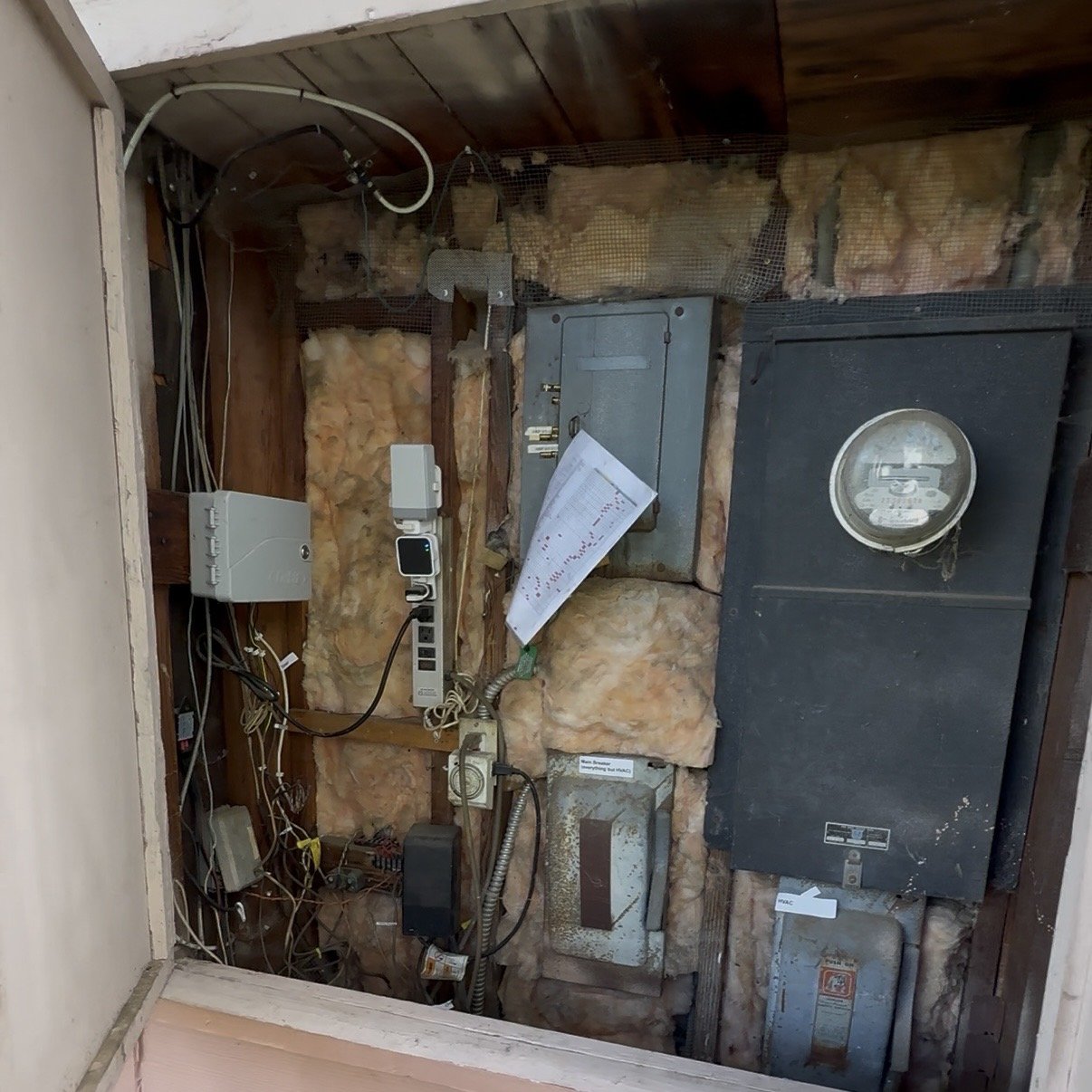
Open the panel door (not the inner cover) and look for the brand name on the label, usually inside the door or along the edge. "Federal Pacific," "FPE," "Stab-Lok," "Zinsco," "Sylvania," "Challenger" or "Pushmatic" means it's on the list above. Round screw-in fuses mean a fuse box.
If the label is worn off or you're not sure, you're welcome to text a photo of it to (818) 245-5201 and we'll tell you what you have. That's optional; we'll check it at your free estimate either way. Please don't remove the inner cover yourself. That's where the live parts are.
Why it matters even if nothing seems wrong
The problem with these panels is that they can look fine from the outside. A breaker that won't trip doesn't announce itself. That's why insurers flag them by brand, regardless of how the panel looks.
Call us right away, day or night, if you notice:
A burning smell near the panel
A panel cover that feels warm
Buzzing or crackling
Scorch marks or melted plastic
We answer 24/7.
What we replace it with
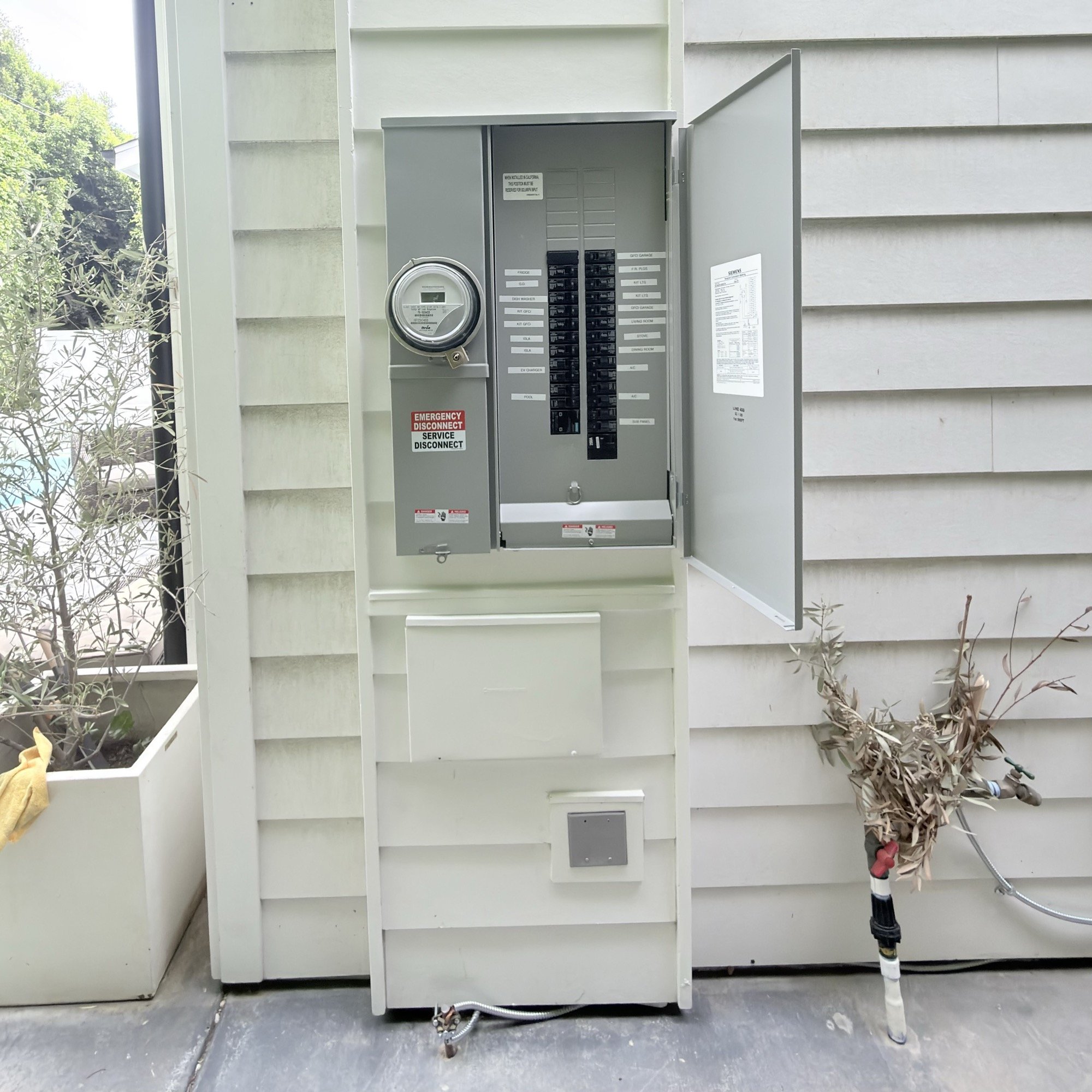
When we replace your panel, the old panel and breakers come out and a new code-compliant main breaker panel goes in, usually 200 amps, with updated grounding and bonding and AFCI protection where required. If you're planning an addition, an ADU or more appliances, we'll run a load calculation first so the new panel fits what's next, not just what you have today.
How a replacement works
Free on-site estimate. We look at your panel and service and give you a written price before any work begins.
Permit. We pull the permit with the city.
Utility coordination. We schedule the shutoff and reconnection with LADWP or SCE.
Installation. Most replacements are done in one day.
Inspection and paperwork. After the city inspection, you get the permit and inspection records for your files, your insurer or a future sale.
Got an insurance letter?
You might first hear about your panel from your insurance company. If you've received a non-renewal notice or a request to replace your panel, we handle those replacements regularly and give you the documentation your insurer asks for. Read more about insurance and fire-zone panel upgrades.
What does it cost?
New 200-amp panels from Homi Home Automation start at $2,500, including the permit and city inspection. Your exact price depends on your home. Here's what a panel upgrade costs and what changes the number.
Get a free written estimate
Homi Home Automation is a licensed C-10 electrical contractor (#1147130) based in Sherman Oaks, serving the San Fernando Valley and the Westside. We'll look at your panel, tell you exactly what you have and give you a written price, at no charge.
Mention this article when you book and save $200 on your panel upgrade.